You love the Cranberry corridor but do not love weekends filled with yard work. If that sounds like you, a townhome or patio-style condo in Seven Fields could be a smart move. You get the location, the convenience, and a lifestyle that trades exterior chores for more free time. In this guide, you will learn how Seven Fields townhome living works, what fees often cover, how to vet an HOA, and how to decide if this option fits your needs. Let’s dive in.
Why Seven Fields appeals
Seven Fields is a small borough in Butler County with a mostly residential feel and quick access to Route 228 and the Cranberry-area retail hubs. The borough’s compact footprint creates a close mix of single-family neighborhoods, patio homes, and attached townhome communities. That variety gives you real choice at different price points and home sizes. You can learn more about the borough on the official site for Seven Fields.
Most addresses in Seven Fields are served by the Seneca Valley School District. If school boundaries matter to your move, always confirm attendance areas directly with the district before you buy. You can review district information in the Seneca Valley School District Annual Report.
What townhomes look like here
Patio-style condos
Many Seven Fields communities include 1990s “patio home” or ranch-style condominium layouts. These often market single-floor living, attached garages, and shared amenities like a pool or clubhouse. They are popular with buyers who want fewer stairs and exterior care handled by the association. You can locate community names and contacts through the borough’s HOA directory.
Traditional multi-story townhomes
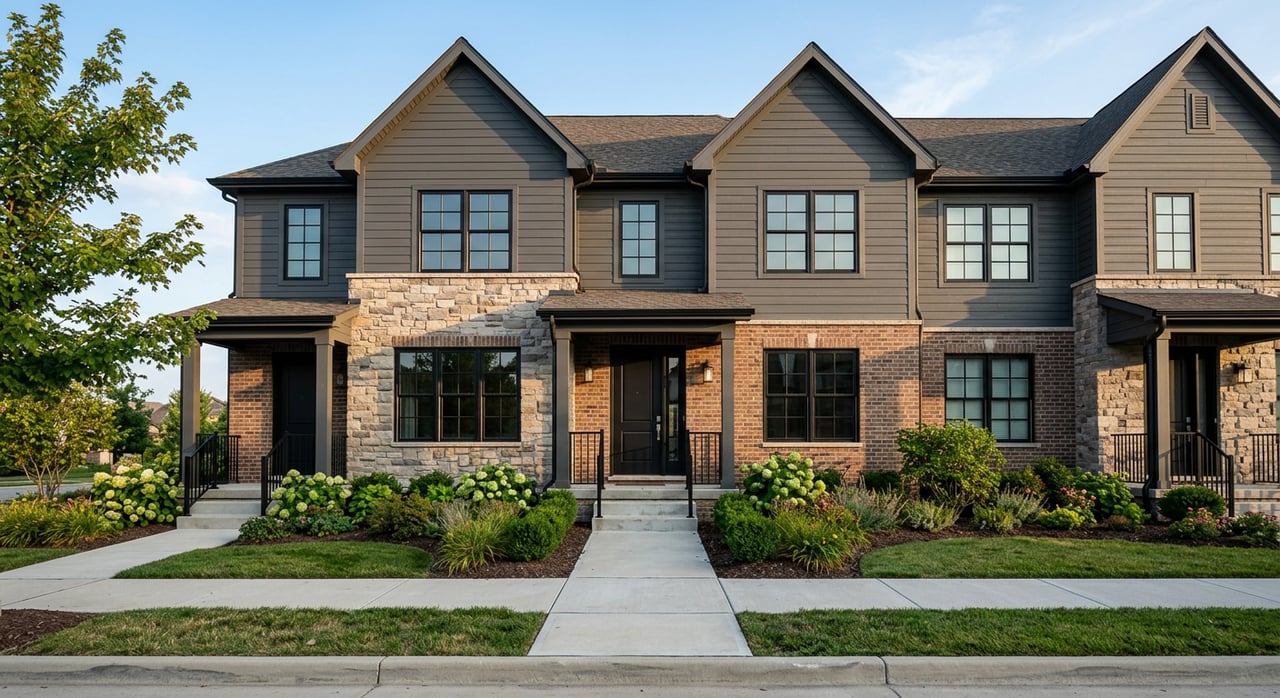
You will also find two and three-story townhomes built from the 1990s through the 2010s. Most include attached garages, flexible living areas, and small private outdoor spaces. Compared with a detached home, you typically handle less exterior upkeep while keeping a familiar home layout.
Newer luxury townhomes
If you prefer modern finishes, elevator options, and rooftop terraces, look at recent luxury projects in Seven Fields. The Enclave at Highpointe by Infinity Custom Homes is a local example that offers multi-level plans, upscale interiors, and community amenities aimed at low-maintenance living near Cranberry retail. Explore the community overview from the builder on the Enclave at Highpointe page.
HOA fees and what they cover
Published listing examples in Seven Fields show HOA dues commonly in a range from about 180 to 370 dollars per month, depending on the community and what services are included. Older patio-style condo communities often fall in the middle of that range, while some newer luxury townhomes show dues near the lower to mid part of it. These are examples only. Always confirm the current monthly fee and budget with the association for the specific address you are considering.
What do dues often cover? Typical inclusions may be grounds care, snow removal on private streets and sidewalks, common-area lighting, pool and clubhouse upkeep, management costs, and parts of exterior building maintenance in condominium regimes. Fee-simple townhomes may include fewer exterior items than condos. The scope varies by community, so request the full list of inclusions in writing.
Maintenance: condo vs townhouse
In a condominium, you usually own the interior of the unit while the association owns and maintains common elements like roofs, exterior walls, and grounds. You will still carry a unit owner policy for your interior finishes and personal property. In a townhouse, the ownership model varies. Some townhomes are fee-simple, which means you may be responsible for the exterior and roof, while others operate under a condo declaration where the association handles more.
The bottom line: never assume who pays for roofing, siding, driveway repairs, or snow removal. Read the governing documents and verify responsibilities line by line before you make an offer.
Reserves, assessments, and HOA health
A strong reserve plan protects owners from surprise costs. The Community Associations Institute (CAI) explains that reserve studies and proper funding are central to planning for big items like roofing, paving, and pool resurfacing. Underfunded reserves can increase the risk of special assessments. Review CAI’s guidance on reserve studies and funding to understand best practices.
Before you buy, ask for these items:
- Covenants, Conditions and Restrictions, bylaws, and rules
- Most recent annual budget and current balance sheet for operating and reserves
- The latest reserve study or a reserve summary
- The last 12 months of board meeting minutes
- Master insurance declarations and deductibles
- Any notices of pending litigation, special assessments, or capital projects
- Current rental policies, pet rules, parking rules, and architectural guidelines
If an HOA resists sharing documents pre-closing, treat that as a warning sign. You can also verify recorded property details through the county using the resources linked by Butler County property records.
Financing and insurance basics
If the property is a condominium, financing can depend on the project’s eligibility with your loan program. FHA and VA have rules for condo approvals, and Fannie Mae and Freddie Mac have their own standards. FHA also allows single-unit approvals in certain cases, but lender overlays vary. Review the FHA update on condo approvals in this HUD release and speak with your lender early.
If the townhome is fee-simple with no condo declaration, financing may look similar to a single-family home. If it is part of a condominium regime, underwriting may follow condo guidelines. You can explore general underwriting guidance in this HUD reference document, then confirm how it applies to your target community.
Insurance needs depend on who covers the building shell. Condos usually require an HO-6 policy for the interior and personal property, paired with the HOA’s master policy for the exterior and common elements. Fee-simple townhomes often use a standard homeowner policy. Ask the HOA for the master policy type and deductibles so your insurance agent can tailor coverage.
Pricing and what drives value
Attached homes in Seven Fields cover a wide spectrum. Patio-style condos and smaller townhomes appeal to buyers prioritizing single-floor living and convenience. Larger, luxury townhomes with modern features attract buyers who want new construction finishes without full yard care. Value is shaped by the community’s amenities, condition and finishes, layout and size, and proximity to the Cranberry corridor.
Because pricing moves with the market and varies by product type, base your decisions on current neighborhood comps and recent sales. A local advisor can pull West Penn MLS data and align it with your goals and timing.
Is Seven Fields townhome living right for you?
Use these questions to pressure-test your decision:
- Maintenance trade-offs. Are you comfortable paying monthly dues to avoid exterior chores and enjoy shared amenities?
- Space and layout. Do you prefer single-floor living or can you handle multi-level stairs and rooftop terraces?
- Budget and predictability. Are you ready to review budgets, reserves, and rules so you understand total cost of ownership?
- Pets, parking, and lifestyle. Do the rules fit your daily life, vehicles, and pets?
- Long-term plans. Will you ever rent the unit, and do the governing documents allow it?
- Commute and access. Does the Route 228 and Cranberry proximity align with your routine?
If these answers point to convenience, flexibility, and location, Seven Fields townhome living can be a strong fit.
How a local advisor helps
Buying into an HOA adds a layer of documents and deadlines. You need someone who can spot contract risks, negotiate protections, and review the details that drive your long-term costs. With legal training and deep experience in Seven Fields and the Cranberry corridor, you get guidance on product type, HOA health, financing pathways, and resale outlook. You also get a clean process that keeps you informed from tour to close.
Ready to compare specific communities and see what fits your plan? Connect with Kelly Cheponis to review current options, request HOA documents, and align your financing. Prefer to start with numbers? Get Your Instant Home Valuation and see how your move could work on a real timeline.
FAQs
What are typical HOA fees for Seven Fields townhomes and condos?
- Recent listing examples show dues roughly in the 180 to 370 dollars per month range, but coverage varies by community and age, so always verify the current fee and budget for the exact address.
Are Seven Fields properties served by Seneca Valley schools?
- Most Seven Fields addresses are served by the Seneca Valley School District, but you should confirm attendance boundaries with the district for your specific address before making an offer.
What maintenance does an HOA usually cover in Seven Fields?
- Many associations cover grounds care, snow removal on private areas, common-area utilities and amenities, and in condominiums some exterior building elements, though fee-simple townhomes may include fewer items.
Can I use FHA or VA financing for a Seven Fields condo or townhome?
- It depends on the project and your lender; condos may require project approval or single-unit approval, while fee-simple townhomes can be financed like single-family homes subject to lender guidelines.
How do I evaluate an HOA’s financial health before buying?
- Ask for governing documents, the latest budget and reserve study, recent meeting minutes, master insurance details, and disclosures on assessments or litigation, then review them with your advisor and lender.
What types of attached homes are available in Seven Fields?
- Options range from 1990s patio-style condos with single-floor living to traditional multi-story townhomes and newer luxury townhomes with modern finishes and amenities.